
Modern societies challenge citizens to take part in decision-making processes namely those focusing on issues that involve scientific and technological matters.
The success of having increasing numbers of informed citizens is linked to the ability of our societies to educate smart, creative, and entrepreneurial individuals with the confidence and capability to think autonomously and critically as well as the ability to generate new knowledge, social and technological innovation and utilize and adapt to technological change.
We live in a time when the educational system still normalizes and standardizes, considering the good student to be the one who sits and replicates in tests the subject given, while having a society that expects autonomous, creative citizens who think and act critically about their lives and their surroundings.
Thirty years ago, the focus was on the development of technical skills, today, when we project the citizen of the 21st century, for today and for the future, we highlight transversal skills as essential. However, if the education system remains in the exercise of routine and passivity, schools will not be able to fulfil their mission of creating value through education.
In this context, the FullSTEAM project aims to:
The actions will be directed primarily to science teachers of the 2nd and 3rd cycles of the Basic Education (but also art and information technology and computing ones) and the project is based on two main pillars:
Implementation of teaching/learning activities through a multidisciplinary (STEAM) approach;
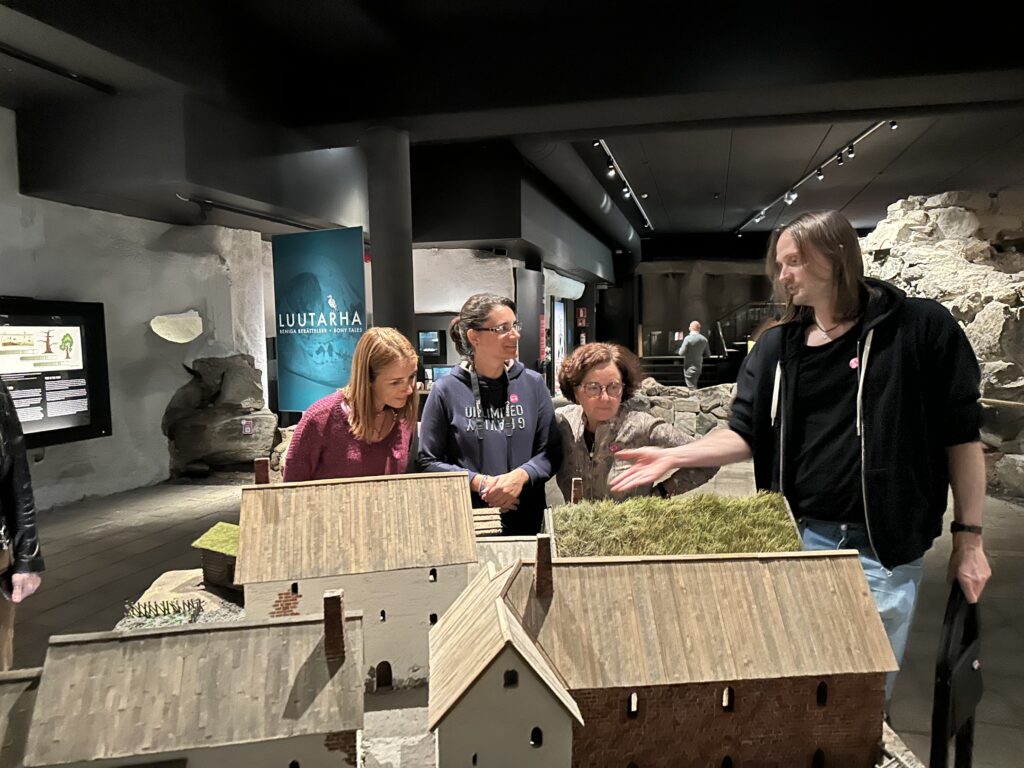
Use of non-formal contexts (institutional and non-institutional spaces such as museums, interpretation centres, beach, parks, cities, etc.) as the scenarios for these activities.
Development of training activities within the schools‘ science programs, through a STEAM approach.
Create a database of educational resources to be made available to schools as supporting teaching tools.
Guide and support teachers throughout the pilot phase and assessment of challenges during the implementation.
By the end of the project, it is expected that: